 Save to Pinterest
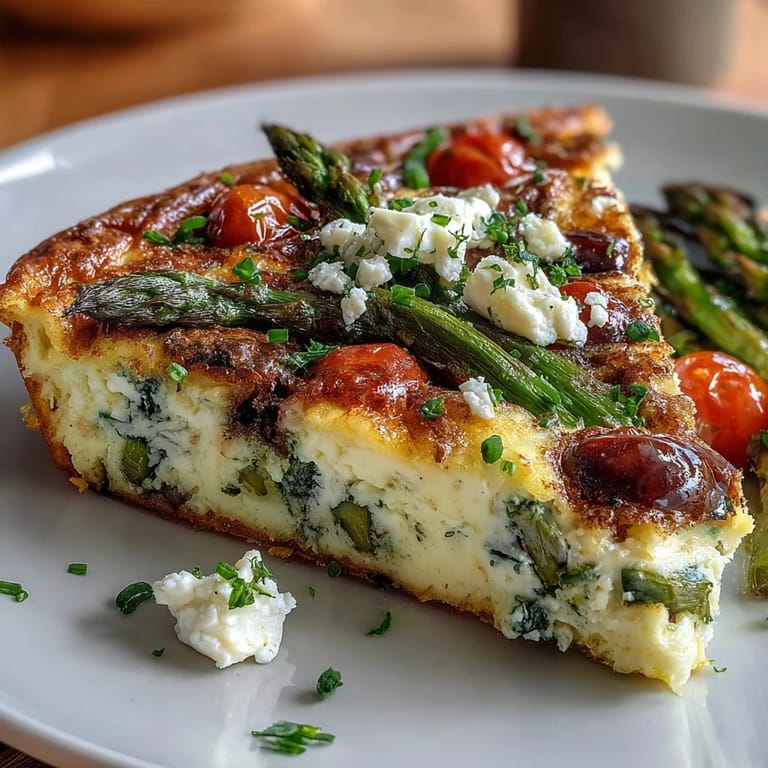
 My sister called on a Tuesday morning asking what to make for her new roommate's first breakfast together, and I found myself describing this frittata without hesitation. There's something about a dish that comes together in one pan, bursting with spring vegetables, that feels both effortless and impressive at the same time. The first time I made it, I was surprised by how the eggs turned silky while the asparagus stayed tender and the feta added this salty brightness I hadn't expected. Now it's become my go-to when I want something that tastes like you spent hours in the kitchen but actually took barely half an hour.
I made this for my friend Marcus who'd just gotten back from the farmer's market with an armful of spring vegetables and no actual plan. We stood in my kitchen sorting through asparagus and cherry tomatoes, and I threw together this frittata more or less on the spot. He kept hovering near the oven window like it was the most suspenseful thing happening, and when it came out all puffed and golden, he actually sat down and ate half of it before I could plate it properly. That's when I knew this recipe had staying power.
Ingredients
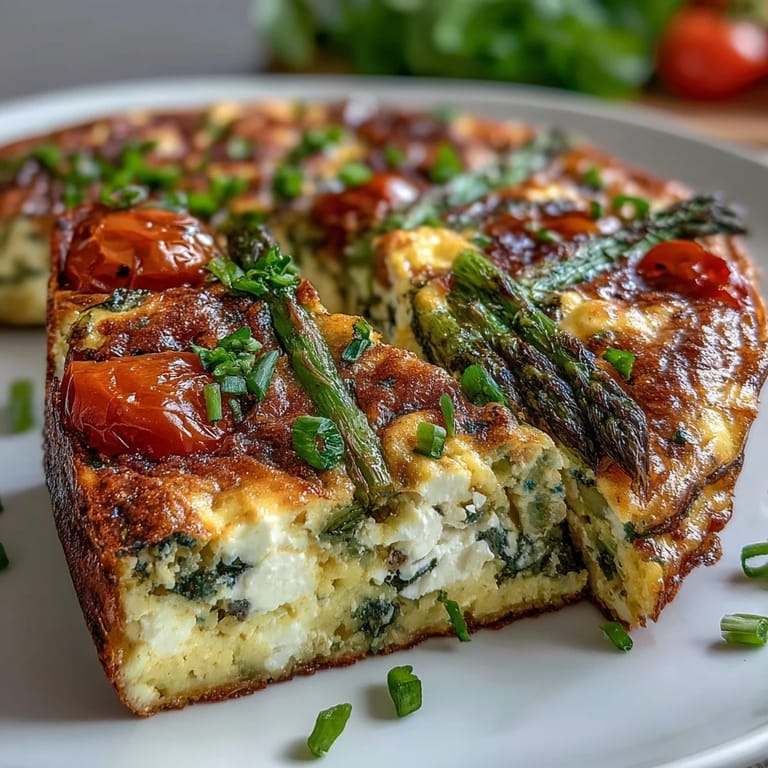
- Asparagus: Cut these into bite-sized pieces so they cook evenly and don't feel woody when you bite into them, which I learned the hard way after leaving them too long.
- Baby spinach: The tender kind wilts down beautifully and disappears into the eggs without overpowering anything.
- Cherry tomatoes: Halving them releases just enough juice to flavor the egg without making things watery.
- Zucchini: Dice small so it softens in the few minutes you're cooking it on the stovetop, otherwise it stays slightly firm inside.
- Red onion: The slight bite of raw onion matters here, so don't skip the initial sauté to soften it first.
- Eggs: Use large ones and whisk them properly until they're pale and slightly fluffy, which incorporates air and makes the finished frittata less dense.
- Milk: A splash keeps things tender, and honestly dairy-free works just as well if that's your preference.
- Feta cheese: Crumble it loosely rather than breaking it into dust, so you get actual pockets of salty flavor throughout.
- Fresh parsley and chives: These add a brightness that makes the difference between a good frittata and one people actually ask for the recipe for.
- Olive oil: Keep it simple and good quality, since it's basically your only fat and it matters to the flavor.
Tired of Takeout? 🥡
Get 10 meals you can make faster than delivery arrives. Seriously.
One email. No spam. Unsubscribe anytime.
Instructions
- Get your oven ready:
- Set it to 375 degrees and let it preheat while you prep everything, so you're not standing around waiting later.
- Warm your oil and soften the onion:
- Pour olive oil into your skillet over medium heat and let the red onion get soft and slightly translucent, which only takes a couple of minutes and mellows out its bite.
- Build layers of texture:
- Add the asparagus and zucchini together and let them cook for a few minutes until they're just starting to soften but still have a little resistance when you bite them. Stir occasionally so they cook evenly.
- Wilt in the delicate stuff:
- Toss in the spinach and cherry tomatoes and cook just long enough for the spinach to darken and collapse, which takes maybe a minute or two at most.
- Mix your egg base:
- In a separate bowl, whisk the eggs with milk and seasonings until they're light and well combined, then pour this mixture evenly over all your vegetables in the skillet. The contrast of the cool egg mixture hitting the warm vegetables is satisfying to watch.
- Add the finishing touches:
- Sprinkle the crumbled feta, parsley, and chives over the top right before it goes in the oven so they don't overcook.
- Finish it in the oven:
- Bake until the center is just set and the top is lightly golden, which usually takes around 10 to 12 minutes depending on your oven. The edges should feel firm when you gently shake the skillet.
- Rest and serve:
- Let it cool for just a minute or two, then slice it into wedges and serve warm or at room temperature, whichever feels right.
 Save to Pinterest
 There was this one morning when my partner brought this frittata to a neighbor we'd just met, still warm in the skillet with a kitchen towel wrapped around it. By the end of the week, they'd asked for the recipe and mentioned making it twice already. It's these small moments that remind me food is really just an excuse to connect with people, and a frittata that looks beautiful and tastes bright does that better than most things in my kitchen.
Why This Works as a Spring Dish
Spring vegetables have a natural sweetness and tenderness that gets lost if you overcook them, which is exactly why this frittata is perfect for this season. The asparagus is at its peak, the tomatoes are starting to get interesting again, and the whole thing feels like you're eating the garden in the best possible way. When you pile fresh herbs on top, suddenly breakfast tastes like a celebration instead of just another meal.
Flexibility and Swaps
One of my favorite things about this recipe is how honestly flexible it is without requiring you to do any weird calculations or adjustments. If you've got different vegetables lying around, just use roughly the same amount and the cooking time barely shifts. The eggs don't care whether it's asparagus or green beans or peas, as long as you sauté things that need it first and add delicate items like spinach toward the end.
Serving Ideas and Pairings
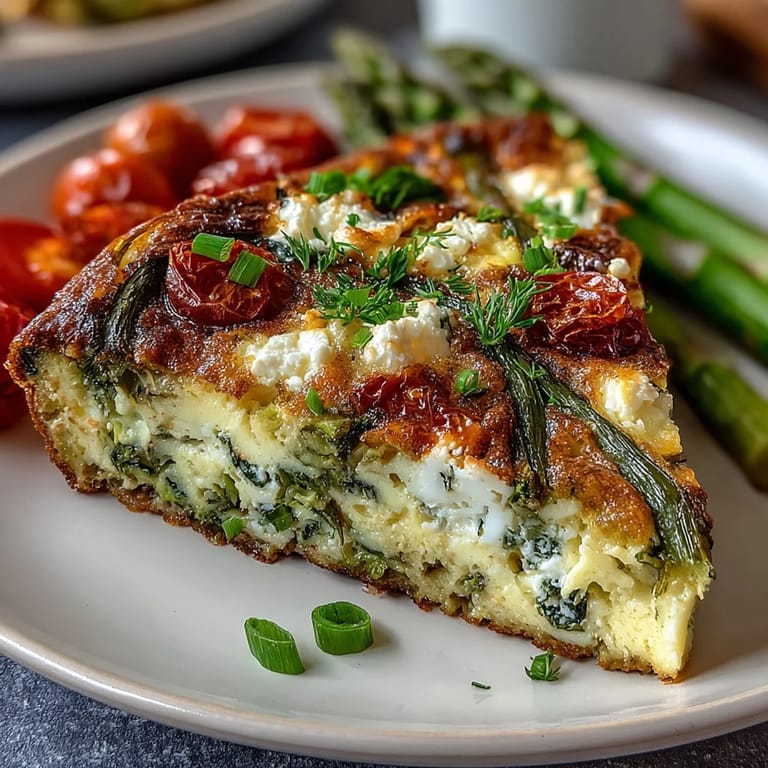
I've served this alongside a simple green salad and crusty bread, and it transforms into something that feels like an actual meal instead of breakfast. A crisp white wine like Sauvignon Blanc cuts through the richness of the eggs and feta in a way that makes you want to linger at the table. It's equally good at room temperature if you're packing it for a picnic or lunch at your desk, which is when you really appreciate how far a good frittata travels.
- Pair with a mixed greens salad tossed with lemon vinaigrette for brightness and balance.
- Serve warm with crusty bread for soaking up any delicious bits left on your plate.
- Make it the night before and bring it to a brunch gathering where everyone will ask where it came from.
 Save to Pinterest
 This frittata has become my answer to the question of what to make when you want something healthy, beautiful, and done in under an hour. It never disappoints, and somehow everyone always remembers it fondly the next time you see them.
Recipe Questions & Answers
- → Can I substitute different vegetables?
Yes, seasonal veggies like peas or leeks can be swapped in to suit your preference and availability.
- → What are good dairy-free alternatives?
Plant-based milks and dairy-free cheese substitutes work well to maintain creaminess without dairy.
- → How do I prevent the frittata from sticking?
Using olive oil in the skillet before cooking and a well-seasoned oven-safe pan helps prevent sticking.
- → Can this dish be served cold or reheated?
Yes, it can be enjoyed warm, at room temperature, or gently reheated without losing texture.
- → What pairs well with this dish?
A mixed green salad and crusty bread complement the frittata nicely; a crisp Sauvignon Blanc is a great beverage choice.