 Save to Pinterest
 My grandmother's kitchen always smelled like onions hitting hot oil, that sharp sizzle that meant something good was coming. She'd stand at her stove with a wooden spoon in hand, not following any written recipe but trusting what her hands already knew—how to coax golden skin onto chicken, how to build a gravy that clung to every piece like a warm embrace. Years later, I realized she was teaching me that soul food isn't about fancy techniques; it's about patience, good ingredients, and the willingness to let flavors develop slowly in a cast iron skillet.
I made this for my partner on a cold Sunday in January, the kind of day where you want everything warm and forgiving. He took one bite and got quiet—the good kind of quiet—and when I asked if something was wrong, he just smiled and said it tasted like a memory he didn't know he had. That's when I understood this dish does something beyond feeding hunger.
Ingredients
- Bone-in, skin-on chicken thighs and drumsticks: These cuts stay moist through the long simmer and give the gravy incredible body from their gelatin—don't swap them for breasts unless you don't mind drier meat.
- All-purpose flour: You'll use it twice, once for dredging and again in the gravy, so reserve what sticks to your hands before it hits the pan.
- Vegetable oil: Use something neutral that won't smoke; the goal is golden skin, not burnt edges.
- Large yellow onions: Slice them thin so they soften into the gravy rather than staying in chunks—this is where the soul of the dish lives.
- Chicken broth: Low-sodium lets you control the salt; homemade is worth the effort if you have it on hand.
- Unsalted butter: Adds richness at the very end, a whisper of luxury that makes the gravy silky.
- Dried thyme: Optional but worth the small effort—it deepens the savory notes without announcing itself.
Tired of Takeout? 🥡
Get 10 meals you can make faster than delivery arrives. Seriously.
One email. No spam. Unsubscribe anytime.
Instructions
- Season and prep your chicken:
- Pat the chicken completely dry with paper towels—moisture is the enemy of crispy skin. Mix your seasonings in a small bowl and rub them all over each piece, getting into the crevices where the skin meets the meat.
- Dredge with intention:
- Combine flour with salt and pepper in a shallow bowl. Coat each piece thoroughly, then shake off the excess over the bowl—you want a thin, even crust, not a thick paste. Set the leftover flour aside for your gravy.
- Fry the chicken golden:
- Heat oil in your skillet over medium heat until it shimmers. Place chicken skin-side down and listen for that satisfying sizzle; fry 6 to 8 minutes without moving it around, then flip and cook the other side until both are deep golden brown. The chicken won't be cooked through yet, and that's exactly right.
- Build your onion foundation:
- Pour off all but 2 tablespoons of oil, then add your thinly sliced onions. Stir them frequently over medium heat for 8 to 10 minutes until they're soft and golden at the edges; this is where patience pays off. The longer they cook, the sweeter they become.
- Create the roux:
- Sprinkle the reserved flour over the onions and stir constantly for 1 to 2 minutes until the flour turns light brown and loses its raw taste. You're building the thickening base for your gravy right here.
- Add the liquid and seasonings:
- Gradually whisk in the chicken broth while scraping the bottom of the pan with a wooden spoon—those brown bits are pure flavor. Stir in thyme, paprika, salt, pepper, and butter, then let it simmer for 2 to 3 minutes until it thickens enough to coat the back of a spoon.
- Braise the chicken to tenderness:
- Nestle the browned chicken pieces into the gravy, spoon some gravy over the top, then reduce heat to low, cover, and simmer for 25 to 30 minutes. You'll know it's done when the meat is fall-apart tender and a thermometer reads 165°F at the thickest part.
- Finish and serve:
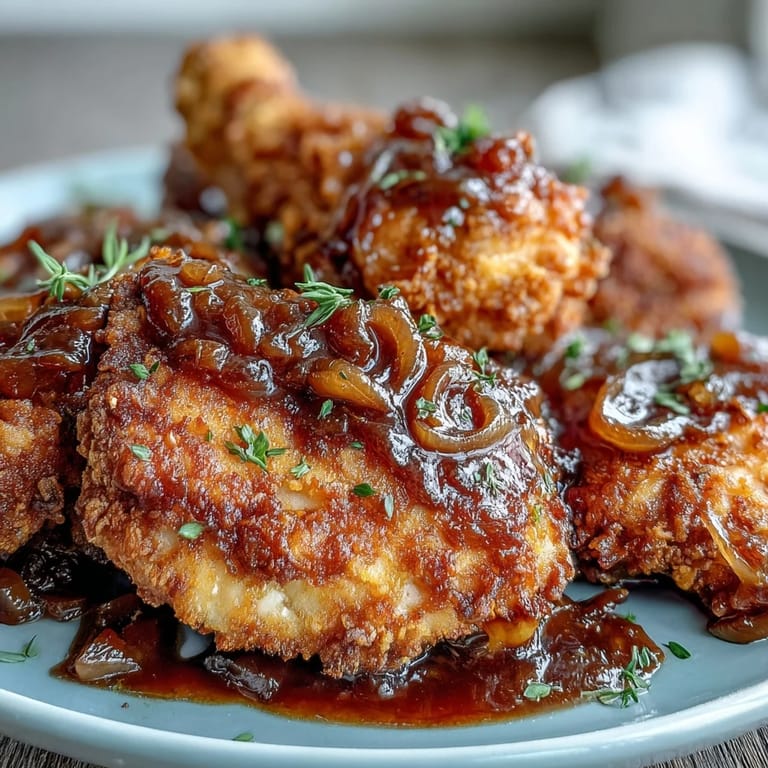
- Serve each piece in a shallow bowl with plenty of that silky onion gravy spooned generously over top. It's best with something to soak up the sauce—mashed potatoes, rice, or crusty bread.
 Save to Pinterest
 My neighbor knocked on the door one evening because she could smell it from her kitchen, and before I knew it, three of us were sitting around my table passing the same skillet from person to person, each of us trying to get every last bit of gravy. Food that brings people together without asking permission—that's when you know you've made something worth making again.
The Art of the Crispy-Skinned Braise
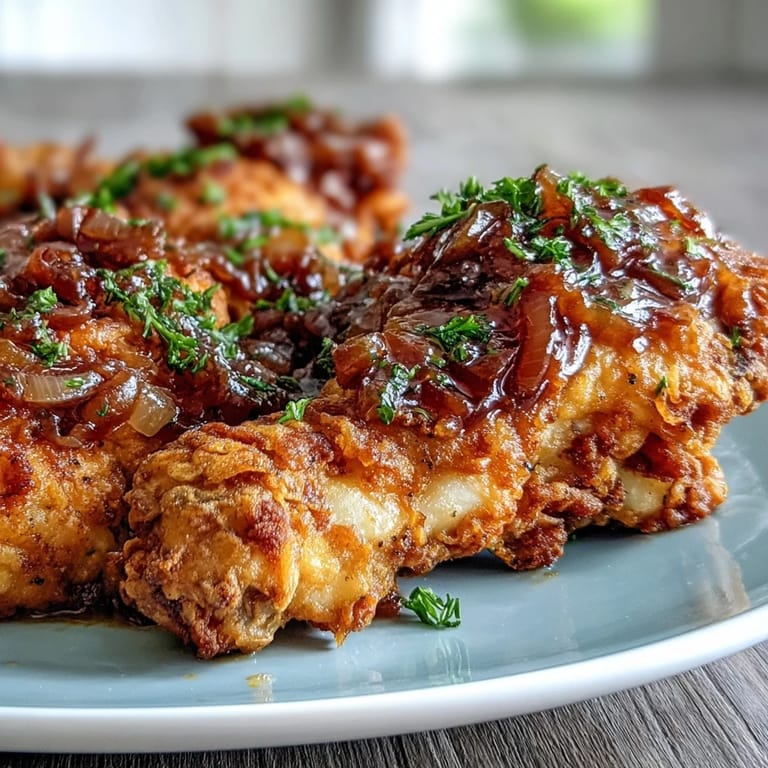
The technique here walks a beautiful line: you fry the chicken hard and fast to lock in that crispy exterior, but you don't fully cook it through. Then the low, slow simmer finishes the job gently, keeping all that rendered fat and seasoning locked under the skin. I've learned that this two-stage cooking is what separates good smothered chicken from great smothered chicken—the skin stays textured while the meat becomes butter-tender underneath. It's a small shift in thinking, but it changes everything.
Why Thin-Sliced Onions Matter
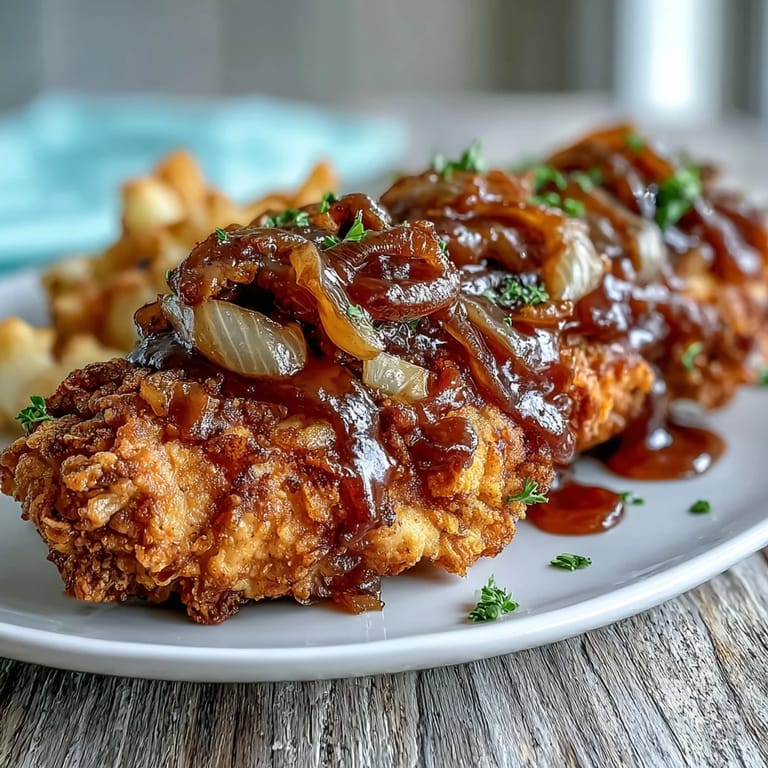
Thick onion slices stay distinct and can turn stringy; thin ones melt into the gravy and create this sweet, jammy base that catches everyone's attention. I discovered this the hard way by leaving them too chunky once, and the texture just wasn't right. Now I slice them as thin as a pencil is wide, and the gravy becomes almost silky, with the onion flavor woven through every spoonful rather than sitting in chunks. Your knife work here is worth the extra minute it takes.
Serve Smart and Make It Better
This dish doesn't need much—it's already complete—but what you choose to serve alongside it matters. Mashed potatoes are the classic choice because they give the gravy somewhere to go, but rice works just as well and feels lighter. I've also served it over buttered egg noodles on nights when I wanted something different, and it was just as right. The constants are warmth, softness, and something that won't compete with what's already on the plate.
- If you have fresh thyme on hand, swap it in for dried at double the amount—it adds a brighter note to the gravy.
- Make extra gravy on purpose; there's always someone who wants another spoonful, and cold leftovers reheat beautifully over low heat.
- Don't waste the bones—save them for stock after you're done eating.
 Save to Pinterest
 This is the kind of dish that tastes even better the next day, when the flavors have had time to get to know each other. Make it once, and you'll understand why people pass recipes like this down through families.
Recipe Questions & Answers
- → What type of chicken works best?
Bone-in, skin-on chicken thighs and drumsticks hold moisture well and develop great flavor when pan-fried and simmered.
- → Can I use boneless chicken?
Yes, boneless skinless chicken can be used but reduce simmering time to prevent overcooking.
- → How is the onion gravy made?
Onions are sautéed until soft and golden, then flour is added to thicken. Chicken broth and seasonings are whisked in to create a rich, savory gravy.
- → What side dishes complement this meal?
Traditional sides include mashed potatoes, rice, or collard greens to balance the hearty flavors.
- → Can I add extra spices for heat?
Yes, a pinch of cayenne pepper in the flour mixture adds a subtle kick to the dish.
- → What cooking tools are needed?
A large heavy skillet with a lid, tongs, shallow bowls, a whisk, and basic cutting tools are essential.