 Save to Pinterest
 There's something about the smell of sausage sizzling in a cast-iron skillet on a quiet morning that makes everything feel right. I learned to make biscuits and gravy from my grandmother, who'd have everything ready before anyone else woke up—the biscuits golden and steaming, the gravy rich and peppery, waiting on the stove. She never rushed it, and neither should you.
I remember making this for my roommate after she had a rough week—we sat in the kitchen eating straight from the plate, not even bothering with the table, and she teared up a little. It's funny how buttery biscuits and creamy gravy can do that.
Ingredients
- All-purpose flour (2 cups): The foundation of tender biscuits; use fresh flour if you can, as older flour sometimes lacks strength and your biscuits may spread too thin.
- Baking powder and baking soda: These two work together to create lift and fluffiness, but don't skip either one or your biscuits will be dense.
- Cold unsalted butter (1/2 cup): This is non-negotiable for flaky layers—warm butter makes dense biscuits, so keep it in the fridge until the last moment.
- Cold buttermilk (3/4 cup): The acidity adds tang and tender crumb; regular milk won't give you the same texture.
- Breakfast sausage (1 pound): Mild or spicy is your call, but the fat in the sausage is what makes the gravy rich and glossy.
- Whole milk (3 cups): Full-fat milk creates a silkier, more luxurious gravy than low-fat versions.
- Freshly ground black pepper: Don't use pre-ground if you can help it; the fresh peppery bite is what makes this gravy sing.
Tired of Takeout? 🥡
Get 10 meals you can make faster than delivery arrives. Seriously.
One email. No spam. Unsubscribe anytime.
Instructions
- Set your oven and prep:
- Preheat to 450°F and line your baking sheet with parchment paper. This high heat is what creates those golden, slightly crispy edges while the inside stays tender.
- Mix your dry ingredients:
- Whisk flour, baking powder, baking soda, salt, and sugar together in a large bowl. Don't skip the whisking—you're aerating the flour and distributing the leaveners evenly.
- Cut in the butter:
- Using a pastry cutter or just your fingertips, work the cold butter into the flour until the mixture looks like coarse breadcrumbs with some pea-sized pieces remaining. Those little butter bits create the flaky layers you're after.
- Bring it together:
- Pour in the cold buttermilk and stir just until the dough comes together—overworking it will make tough, dense biscuits. Stop as soon as you don't see dry flour anymore.
- Fold and rest:
- Turn the dough onto a lightly floured surface and gently pat it to about 1 inch thick. Fold it over on itself 2 or 3 times, then pat again to 1 inch. This folding creates those gorgeous laminated layers without the intensity of croissant dough.
- Cut and arrange:
- Use a 2.5-inch biscuit cutter to cut your biscuits, pushing straight down without twisting (twisting seals the edges and prevents rise). Place them close together on the baking sheet so they support each other as they bake.
- Bake until golden:
- Bake for 12 to 15 minutes until the tops are a deep golden brown. They'll smell incredible and feel light when you touch them.
- Brown the sausage:
- While the biscuits bake, cook your crumbled sausage in a large skillet over medium heat, breaking it up with a wooden spoon, until it's browned and no longer pink. Don't rush this—you want the sausage fully cooked and slightly crispy in spots for better flavor.
- Make the roux:
- Sprinkle the flour over the cooked sausage and stir constantly for 1 to 2 minutes until the flour absorbs all those savory sausage drippings. This is your flavor foundation.
- Whisk in the milk:
- Gradually pour in the milk while stirring constantly to prevent lumps from forming. The mixture will start thick and then loosen up as you add more milk.
- Simmer and season:
- Bring everything to a gentle simmer and let it bubble softly for 5 to 7 minutes, stirring occasionally, until it coats the back of a spoon. Add black pepper, salt, and a pinch of cayenne if you like heat, then taste and adjust.
- Plate and serve:
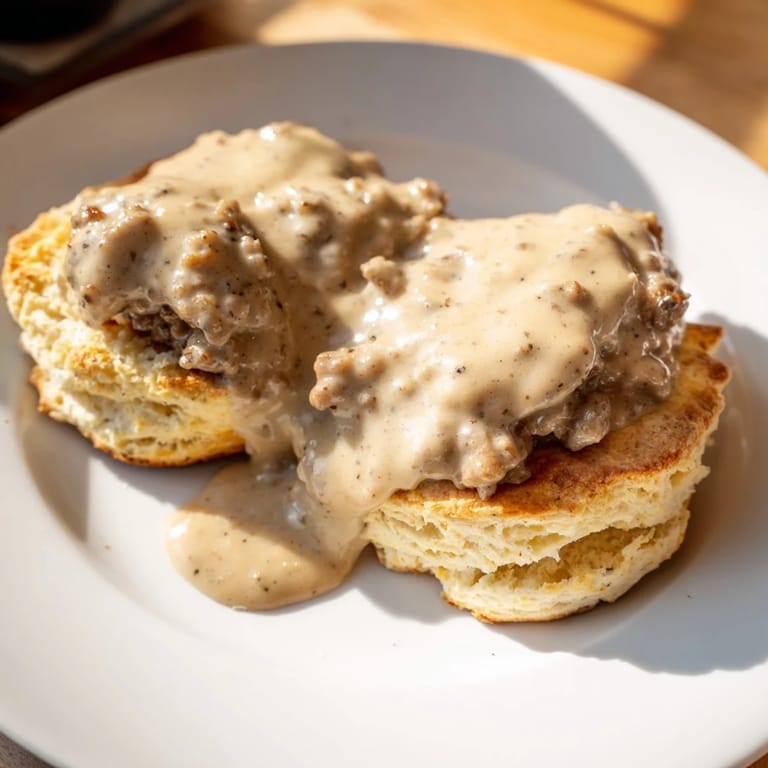
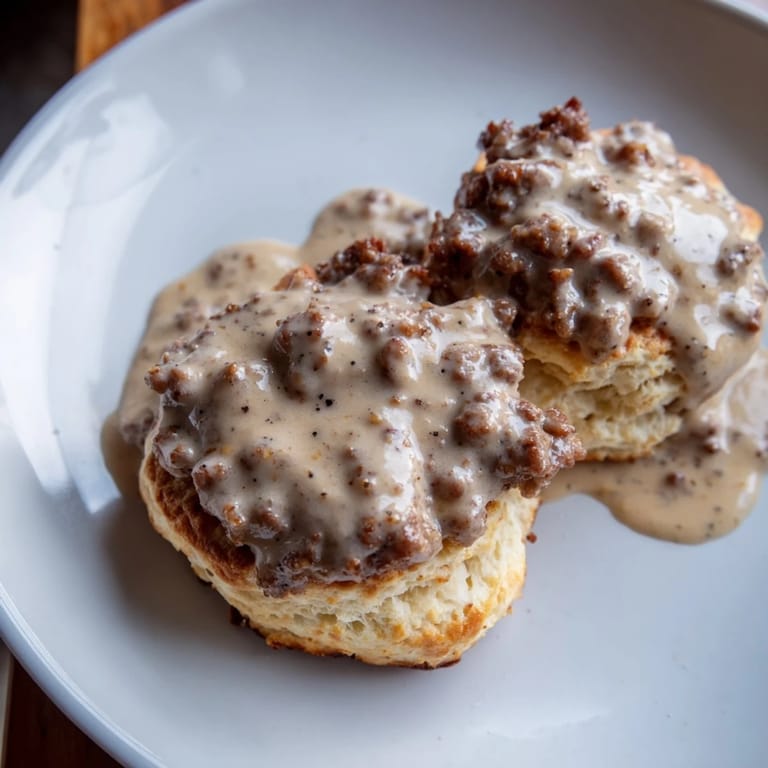
- Split warm biscuits and spoon the hot gravy generously over top. Serve immediately so the biscuits stay warm and absorb all that creamy, peppery goodness.
 Save to Pinterest
 One morning I burned the bottom of the biscuits and thought the whole batch was ruined, but my sister just broke them in half and smothered them in extra gravy—no one complained, and honestly, the crispy edges were better. That's when I realized this dish is forgiving if you keep your head.
Building Layers You Can See
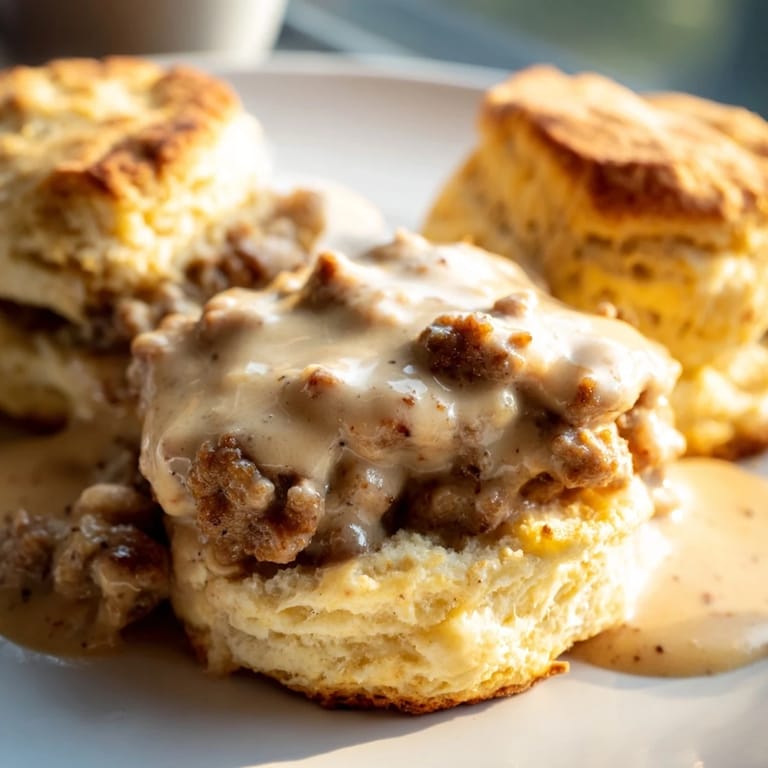
The magic of biscuits lives in those visible, flaky layers that peel apart when you break one open. This happens because of the folding technique and because cold butter creates steam pockets as it bakes—those pockets separate the flour layers. Some people skip the folding step to save time, but that's where half the texture goes.
Getting the Gravy Silky Not Lumpy
The biggest mistake is rushing the milk into the sausage and flour mixture without stirring. A lumpy gravy can't be fixed retroactively, so take your time and whisk constantly as you pour. If lumps do form, you can strain the gravy through a fine-mesh sieve, though prevention is always easier.
Making It Your Own
While this recipe is classic for a reason, I've experimented with adding dried sage or thyme to the sausage, which adds an herbal warmth that feels a little less expected. You can also finish the gravy with a crack of fresh nutmeg if you want to add a subtle sweetness that rounds everything out.
- A pinch of garlic powder mixed into the sausage gravy adds depth without overpowering the peppery heat.
- If you prefer a thinner gravy, add a splash more milk at the end rather than thinning it during cooking.
- Leftover biscuits stay fresh in an airtight container for a day or two—warm them gently in the oven before serving.
 Save to Pinterest
 This breakfast deserves a quiet moment and someone you care about sharing it with—the kind of meal that says you have time, that someone matters. That's the real recipe.
Recipe Questions & Answers
- → How can I ensure biscuits turn out flaky?
Use cold butter and handle the dough minimally to maintain flaky layers. Fold the dough gently before cutting biscuits.
- → What type of sausage works best for the gravy?
Breakfast sausage, either mild or spicy, crumbled and cooked until browned, provides the best flavor and texture.
- → Can the gravy be made spicier?
Yes, adding extra black pepper or cayenne pepper enhances the gravy's heat based on personal preference.
- → How do I prevent lumps in the gravy?
Sprinkle flour evenly over cooked sausage and stir constantly as you gradually add milk to ensure a smooth, creamy consistency.
- → Are there ways to add herbal notes to the dish?
Incorporate a pinch of dried sage or thyme into the sausage gravy for subtle herbal undertones that complement the richness.