 Save to Pinterest
 My coworker brought a Korean beef bowl to lunch one Tuesday, and I watched her eat it with this quiet satisfaction that made me curious. She let me try a spoonful of that glossy, spicy beef, and suddenly I understood why she packed it three times a week. The way the heat from the gochujang mixed with the sweetness of brown sugar, the crunch of pickled vegetables cutting through everything—it felt both complex and impossibly simple. That night I made my own version, and it's been my go-to bowl ever since, especially on days when I need something that tastes like it took hours but actually doesn't.
I made this for my sister during a late-night cooking session when we were both avoiding sleep, and something about assembling these bowls together while talking turned into one of those moments you don't forget. She piled her vegetables high, I went heavier on the beef, and we ended up sitting on the kitchen counter at midnight eating and laughing about nothing in particular. Now whenever she visits, this is what she asks me to make, and I love that this bowl has become our thing.
Ingredients
- Lean ground beef (1 lb): The foundation of everything—use 90/10 or 93/7 if you can, because the fat content really affects how the sauce clings to the meat.
- Gochujang (3 tbsp): This Korean chili paste is the heart of the dish, bringing fermented depth and heat that regular chili powder can't match.
- Soy sauce (2 tbsp): The umami anchor that makes every other flavor pop, though use tamari if you need it gluten-free.
- Brown sugar (1 tbsp): Creates that glossy coat on the beef and balances the spice with subtle sweetness.
- Toasted sesame oil (1 tsp): A little goes a long way; it's peppery and nutty and finishes the sauce with sophistication.
- Fresh garlic and ginger (3 cloves and 1 tbsp): Mince them fine so they distribute throughout the beef and bloom properly in the hot oil.
- Rice vinegar (1 tbsp plus 1/2 cup for pickling): The tangy element that prevents everything from feeling too heavy and helps create those bright pickled vegetables.
- Carrot and daikon radish (1/2 cup each, julienned): Quick-pickling these gives you a fresh, crisp texture that cuts through the richness of the beef.
- Cucumber and radish slices (1 cup plus 1/2 cup): These raw vegetables stay cool and hydrating against the warm, spiced beef.
- Kimchi (1 cup): The fermented kick that makes this bowl feel alive, though check the label if you're avoiding seafood.
- Toasted sesame seeds (1 tbsp): Sprinkle these at the end for a nutty finish and that essential Korean bowl aesthetic.
- Green onions (2, thinly sliced): Split between cooking and garnishing to layer their fresh onion bite throughout the dish.
Tired of Takeout? 🥡
Get 10 meals you can make faster than delivery arrives. Seriously.
One email. No spam. Unsubscribe anytime.
Instructions
- Start your pickles while your hands are free:
- Combine rice vinegar, sugar, and salt in a small bowl and stir until the sugar fully dissolves. Add your julienned carrot and daikon, mix everything together, and let it sit undisturbed—the vegetables will soften and turn tangy while you work on the beef.
- Get your aromatics fragrant:
- Heat vegetable oil in a large skillet over medium-high heat until it shimmers, then add your minced garlic and ginger. You want to smell that piney, warm aroma after about a minute; this means your oil is ready to accept the beef without the garlic burning.
- Brown the beef with intention:
- Add your ground beef to the skillet in a loose pile, then let it sit undisturbed for a minute before breaking it up with a wooden spoon. This creates little browned edges instead of gray, steamed meat, which makes all the difference in flavor.
- Build the sauce:
- Once the beef is cooked through and most of the liquid has evaporated, stir in the gochujang, soy sauce, brown sugar, rice vinegar, and toasted sesame oil all at once. Keep stirring for 2–3 minutes until everything mingles into a glossy coating that clings to each grain of beef.
- Finish with fresh notes:
- Remove from heat and stir in half of your sliced green onions, letting their freshness carry through the warm beef.
- Assemble your bowl with intention:
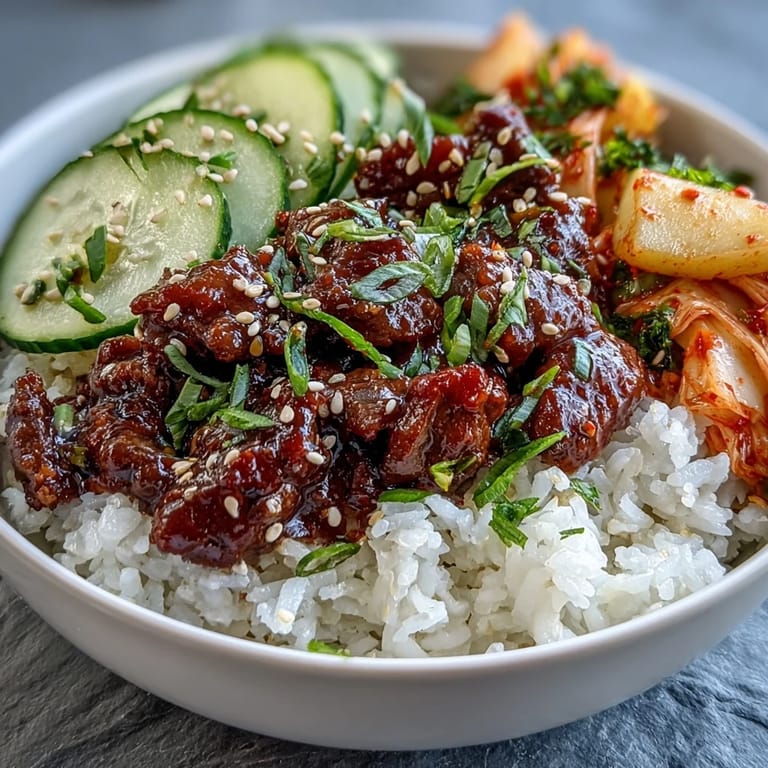
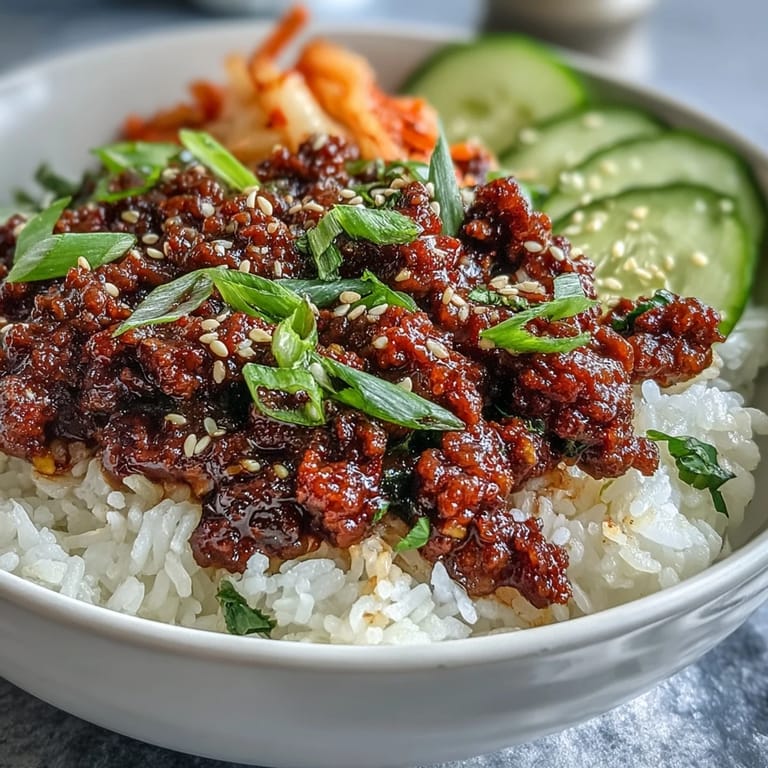
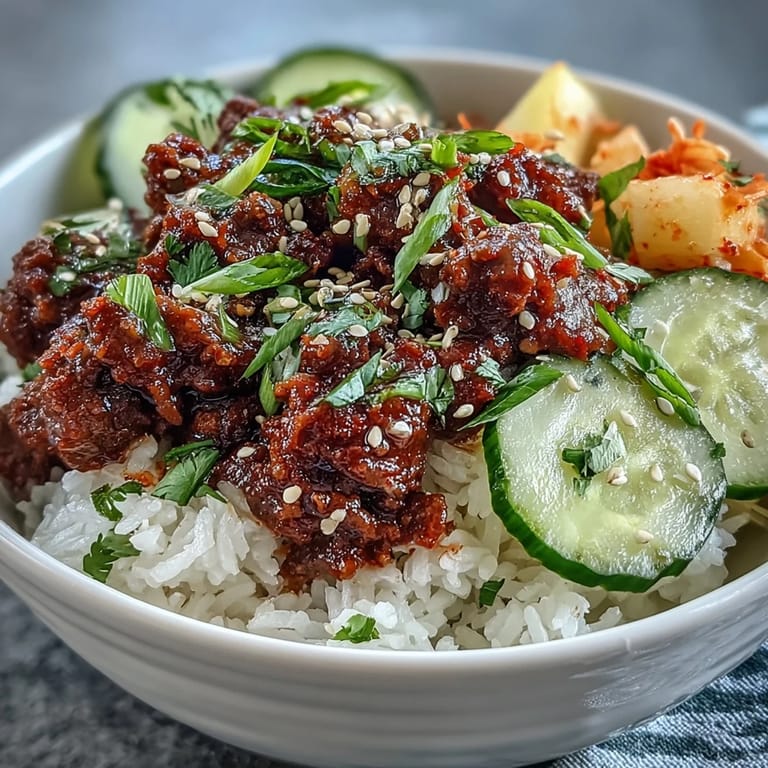
- Start with a base of rice in each bowl, then pile the warm spiced beef in the center. Arrange your pickled vegetables, fresh cucumber slices, radish, and kimchi around the edges so each bite includes multiple textures and temperatures.
- Garnish and serve right away:
- Top with remaining green onions and a generous sprinkle of toasted sesame seeds. Eat it while the rice is still warm and the pickled vegetables are still cool and snappy.
 Save to Pinterest
 There's something almost meditative about the way a Korean beef bowl comes together, each element in its own section of the bowl, waiting for you to take a bite that combines everything at once. It's the kind of dish that works just as well for a quick dinner after a long day as it does for feeding friends, because it looks thoughtful without requiring any actual magic.
The Secret to Glossy, Clinging Sauce
The magic happens when you add all your sauce ingredients at once instead of gradually—gochujang, soy sauce, brown sugar, vinegar, and sesame oil all hit the hot beef simultaneously, and the heat creates this cohesive, glossy coating. I learned this the hard way by adding ingredients one at a time and ending up with a watery mess instead of that restaurant-quality shine.
Temperature Contrast Makes It Sing
Never let the pickled vegetables, cucumber, and kimchi get warm. Assemble them fresh and crisp so they create a temperature and texture contrast against the hot beef and warm rice. This contrast is what keeps your mouth interested throughout every spoonful instead of everything tasting flat and one-note.
Ways to Make It Your Own
This bowl is forgiving and flexible, which is part of why it works so well as an everyday dinner. The framework stays the same, but you can adjust heat levels, swap proteins, or add whatever vegetables happen to be in your crisper drawer.
- Swap ground chicken or turkey for the beef if you want something leaner, though cook it the same way and watch that it doesn't dry out.
- Add a drizzle of sriracha or an extra dollop of gochujang if you like your bowls spicier and darker.
- Use tamari instead of soy sauce and verify your gochujang is gluten-free if that matters to you.
 Save to Pinterest
 This Korean beef bowl has become my answer to the question of what to make when I want something that tastes impressive but doesn't require me to spend my entire evening in the kitchen. Make it once and you'll understand why it's so hard to stop making it.
Recipe Questions & Answers
- → What cut of beef works best for this dish?
Lean ground beef is ideal to balance flavor with lower fat content, helping achieve a tender yet hearty texture.
- → How do you make the pickled vegetables crisp and flavorful?
Use a quick pickling mixture of rice vinegar, sugar, and salt. Let the julienned carrots and daikon radish soak while cooking the beef for optimal crunch and tang.
- → Can I adjust the spice level in the sauce?
Yes, increasing or reducing gochujang or adding sriracha allows you to customize the heat to your preference.
- → What type of rice pairs well with this dish?
Steamed white or brown rice provides a neutral base that complements the bold flavors of the beef and pickled vegetables.
- → Are there easy substitutions for dietary preferences?
Ground chicken or turkey can replace beef, and tamari can be used instead of soy sauce for a gluten-free alternative.