 Save to Pinterest
 My coworker walked past my desk one afternoon with a bowl that smelled like a Korean restaurant had exploded in the best way possible—ginger, sesame, something spicy and tangy all at once. She caught me staring and laughed, explaining it was just beef and rice, but the way she'd layered everything made it feel like actual art. That's when I realized how a few smart ingredients and a little bit of theater could turn a simple weeknight dinner into something that made people pause mid-conversation to ask for the recipe.
I made this for my sister's book club night when she asked me to bring something that wasn't just salad but also wasn't a heavy casserole situation. Watching five people who'd never met before bond over these bowls, passing sriracha mayo back and forth and debating the perfect beef-to-cucumber ratio, taught me that good food does something social—it gives people permission to be a little less formal with each other.
Ingredients
- Flank steak or sirloin, thinly sliced (500 g): Flank is more forgiving and absorbs the marinade better, but sirloin works if that's what's in your case—the key is slicing it thin so it cooks fast and stays tender even if you accidentally leave it on heat a bit too long.
- Soy sauce (2 tbsp): Use the regular stuff, not low-sodium, because you want that punch of umami that makes people wonder what secret ingredient you're hiding.
- Sesame oil (1 tbsp): This is not cooking oil—it's liquid gold that goes in at the end of the marinade, and a little goes a long way in both flavor and smell.
- Fresh ginger, grated (1 tbsp): Microplaning it gets you a finer texture than a box grater, and the oils release better when you're grating it fresh.
- Garlic, minced (2 cloves): Don't use the jar stuff here—fresh garlic matters because you're not cooking it long enough for jarred to taste normal.
- Brown sugar (1 tbsp): This balances the saltiness and helps create that slightly glossy caramelization on the beef.
- Rice vinegar (1 tbsp for marinade, plus 1/3 cup for pickled carrots): Rice vinegar is gentler than white vinegar and tastes cleaner, which is why it shows up twice in this recipe.
- Gochujang, optional (1 tsp): This fermented chile paste adds complexity and a gentle heat, but if you can't find it or don't like heat, the bowl is still delicious without it.
- Black pepper (1/4 tsp): Freshly cracked makes a difference here because the marinade is otherwise pretty mellow.
- Jasmine or short-grain white rice (2 cups cooked): Jasmine has a gentle sweetness that pairs well with the savory beef, but short-grain works too because it's stickier and holds the sauce better.
- Carrots, julienned (1 cup): Julienne them thin so they pickle faster and have better texture—thick carrot pieces feel almost raw even after sitting in vinegar.
- Sugar for pickled carrots (1 tbsp): This balances the vinegar's sharp edge and makes the carrots taste more refined than just sour.
- Salt for pickled carrots (1/2 tsp): This draws out the carrot's natural moisture and helps the pickling liquid penetrate.
- Cucumber, thinly sliced (1 cup): English cucumbers have fewer seeds and stay crispier than regular ones, but either works—slice them thin so they don't add water weight to the bowl.
- Fresh jalapeño, thinly sliced (1): Leave some seeds if you like heat, remove them for more color with less bite.
- Toasted sesame seeds (2 tbsp): Buy them pre-toasted or toast them yourself in a dry pan for 2 minutes—toasting wakes up their nutty flavor.
- Green onions, thinly sliced (2): Slice the white and light green parts for more punch, and scatter some dark green on top for looks.
- Mayonnaise (1/3 cup): Regular mayo works perfectly, and if you're dairy-free, vegan mayo behaves the same way.
- Sriracha (1–2 tbsp): Start with 1 tablespoon and taste as you go because different brands have different heat levels.
- Lime juice (1 tsp): Fresh lime is non-negotiable here—the brightness matters.
Tired of Takeout? 🥡
Get 10 meals you can make faster than delivery arrives. Seriously.
One email. No spam. Unsubscribe anytime.
Instructions
- Start the pickled carrots first:
- In a small bowl, whisk together rice vinegar, sugar, and salt until the sugar dissolves, then toss in your julienned carrots and let them sit for at least 20 minutes while you handle everything else. This timing trick means your carrots are ready exactly when you need them, and they'll stay crisp instead of getting soggy.
- Build your beef marinade:
- In a large bowl, combine soy sauce, sesame oil, ginger, garlic, brown sugar, rice vinegar, gochujang if you're using it, and black pepper—stir until everything is mixed and the sugar dissolves. The marinade should smell aggressive and aromatic, which is how you know you're on track.
- Marinate the beef:
- Add your sliced beef to the marinade and toss it until every piece is coated, then set a timer for 15 to 20 minutes—don't skip this because it's where the flavor actually gets into the meat. If you're short on time, 10 minutes works, but 20 is noticeably better.
- Prepare the rice if needed:
- If your rice isn't already cooked, now's the time to get that going according to package instructions so it's fluffy and warm when you're ready to assemble. Some people like to drizzle the warm rice with a tiny bit of sesame oil before adding toppings, which is a small move that pays off.
- Mix your sriracha mayo:
- In a small bowl, combine mayonnaise, sriracha, and lime juice, then taste and adjust the heat to your preference—some people want it barely spicy, others want it to make them think twice. Having this ready before you start cooking the beef means you're not scrambling at assembly time.
- Sear the beef over high heat:
- Heat a large skillet or wok over high heat until it's actually hot (this usually takes 2 minutes), then add the beef in a single layer and don't move it for 2 to 3 minutes so it gets that golden crust. Flip it, cook the other side for another 2 to 3 minutes until it's browned but still slightly pink in the middle, because it keeps cooking for a few seconds after you pull it off heat.
- Assemble your bowls:
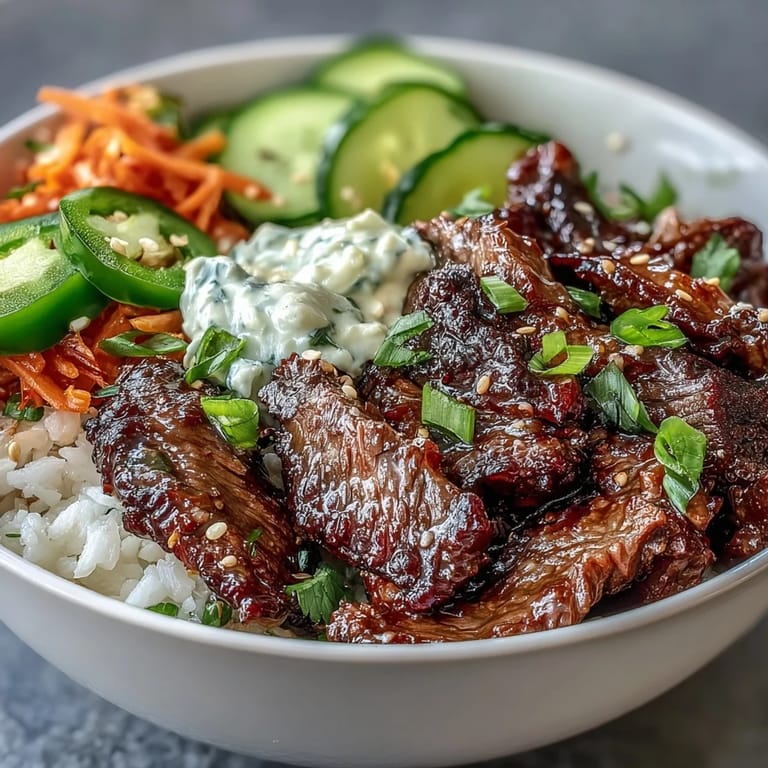
- Divide warm rice into four bowls, then layer the cooked beef, drained pickled carrots, cucumber slices, jalapeños, and green onions on top in whatever pattern looks good to you. Sprinkle sesame seeds over everything and drizzle generously with sriracha mayo, then serve immediately while the rice is still warm and the cucumbers are still crisp.
 Save to Pinterest
 My partner came home one evening to find me standing in front of four bowls like they were precious objects, photographing them from different angles because I was genuinely proud of how good they looked. He ate one in about four minutes without saying much, then made another one for himself, and that's when I knew this recipe had graduated from something I'd learned to something that actually belonged in our regular rotation.
Why the Layers Matter
The whole point of this bowl is that you get something different in every spoonful—warm savory beef, cool crisp vegetables, creamy mayo, pickled sharpness, all at once. When I first made this, I threw everything on top in a random way and it tasted fine, but then I arranged it more thoughtfully and realized that how you layer things actually changes the eating experience because you're hitting different flavors and temperatures with each bite.
Timing and Flexibility
The beauty of this recipe is that nothing requires split-second timing except the beef sear, so you can prep everything else hours ahead if you're cooking for guests. Pickled carrots actually taste better after sitting overnight, rice can be made that morning, and the sriracha mayo keeps in the fridge for days—only the beef needs to happen right before eating.
Small Details That Make the Difference
I've learned that the sesame seeds need to be toasted, the mayo needs lime juice to feel bright instead of heavy, and the beef really does need to be sliced thin so the marinade can actually penetrate. These aren't complicated things, but they're the difference between a bowl that tastes good and one that tastes intentional.
- If you can't find gochujang, the bowl is still delicious—don't stress or substitute with hot sauce because the flavor profile is different.
- Slice your beef against the grain if you want it to be more tender, and make sure your skillet is truly hot or you'll end up with gray meat instead of browned meat.
- Make extra sriracha mayo because people always want more than you think, and it's better to have too much than to run out mid-bowl.
 Save to Pinterest
 This bowl has become the recipe I make when I want to feel like I'm actually cooking instead of just heating things up, and it somehow always impresses people even though it's genuinely simple. There's something satisfying about taking a handful of separate ingredients and arranging them into something that looks and tastes completely thought-out.
Recipe Questions & Answers
- → What cut of beef works best for this bowl?
Flank steak or sirloin are ideal choices because they're lean, tender, and absorb marinades beautifully. Slice the beef thinly against the grain for the most tender texture. The quick searing method keeps the meat juicy while developing a delicious caramelized exterior.
- → Can I make the components ahead of time?
Absolutely. The pickled carrots actually improve with time and can be made up to a week in advance. The beef marinade works well for several hours, and the sriracha mayo keeps refrigerated for 3-4 days. Cooked rice can be stored for 2-3 days. Just reheat components separately before assembling for the best texture.
- → How can I adjust the spice level?
The heat comes from jalapeños, gochujang, and sriracha. For mild bowls, omit the gochujang from the marinade, use fewer jalapeño slices, and reduce sriracha in the mayo. To increase spice, add more gochujang to the beef, include extra jalapeño seeds, or drizzle additional sriracha over the finished bowl.
- → What rice alternatives work well?
Brown rice adds nutty flavor and extra fiber, while cauliflower rice reduces carbohydrates dramatically. Quinoa provides complete protein and a fluffy texture. For traditional Korean authenticity, try short-grain white rice, which becomes slightly sticky and helps bind the bowl components together.
- → Is this bowl freezer-friendly?
Individual components freeze well. Cooked beef can be frozen for 2-3 months, as can cooked rice. However, fresh vegetables like cucumber and pickled carrots lose texture when frozen and thawed. The sriracha mayo should always be made fresh. Freeze components separately and assemble after thawing.
- → What vegetables can I add for more variety?
Shredded red cabbage adds color and crunch, while edamame contributes extra protein. Steamed broccoli or sautéed bok choy brings more greens. Sliced avocado offers creaminess that complements the spicy mayo. Kimchi makes an authentic Korean addition with probiotic benefits.