 Save to Pinterest
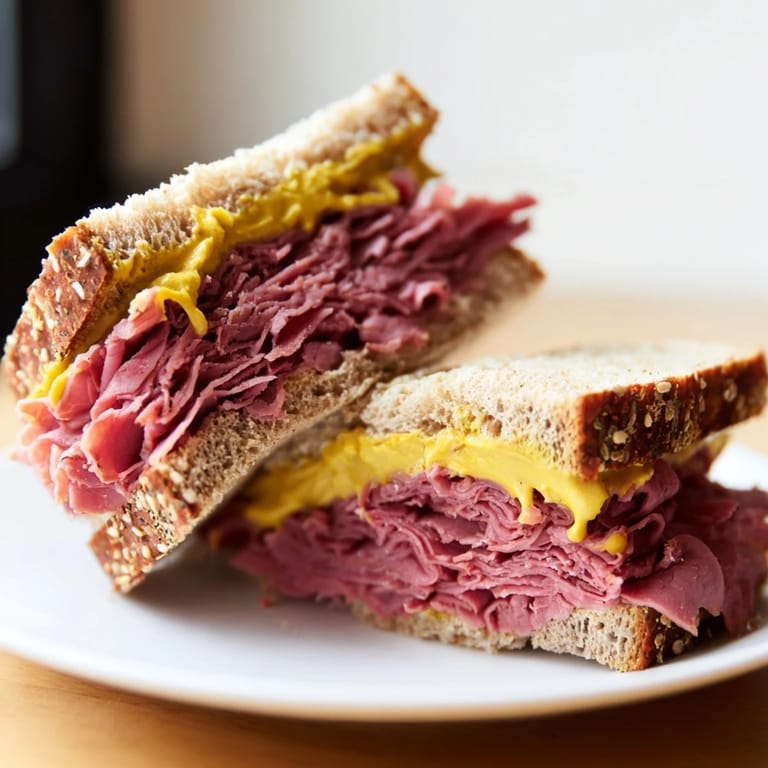
 There's something about stepping into a New York deli on a cold morning that makes you understand why this sandwich matters. The smell hits you first—mustard, cured meat, rye bread toasting slightly from the warmth of the steam rising off the counter. I learned to make pastrami on rye not from a cookbook, but from watching the guy behind the counter at Katz's move with such casual precision that it looked like meditation. He'd layer the pastrami so thick it nearly fell off the bread, and I thought, that's it, that's the whole recipe.
I made this for my brother one Sunday afternoon when he showed up unannounced, complaining that nowhere near us did pastrami justice. Fifteen minutes later, watching him bite through those layers—the sharp mustard, the tender meat, the slight chew of the rye—I saw him go quiet in that particular way people do when food suddenly means something. He didn't say much, just nodded, and that felt like the highest compliment.
Ingredients
- Rye bread: The caraway seeds aren't decoration—they're a flavor anchor that deli owners have counted on for a reason, giving each bite a subtle earthiness that plain bread can't touch.
- Pastrami: Buy it sliced thin at the deli counter, not pre-packaged; the quality difference is immediate and worth the small extra effort.
- Mustard: Yellow deli mustard has a brightness that holds its own against the pastrami's richness, though spicy brown will shift the whole personality of the sandwich if you want more heat.
- Dill pickles: These aren't just a side dish—they're a palate cleanser and a textural contrast that completes the experience.
Tired of Takeout? 🥡
Get 10 meals you can make faster than delivery arrives. Seriously.
One email. No spam. Unsubscribe anytime.
Instructions
- Set up your station:
- Lay the rye bread on a clean surface where you can work without rushing. The bread should feel fresh and have a slight give when you press it—stale bread will fall apart under the weight of the pastrami.
- Apply the mustard:
- Spread about 1 tablespoon on each of two slices, using the back of a knife to get an even, thin layer. The goal isn't to cover every inch, but to create enough mustard that you'll taste it in every bite.
- Layer the pastrami:
- Pile roughly 125 grams (about 4.5 ounces) on each mustard-coated slice, letting it mound slightly in the middle. The thickness here is crucial—thin enough to stay inside the sandwich, thick enough that you know it's there.
- Close it up:
- Place the remaining bread slices on top with a gentle press, just enough to hold everything together. You want the bread to support the pastrami, not squeeze it.
- Cut and serve:
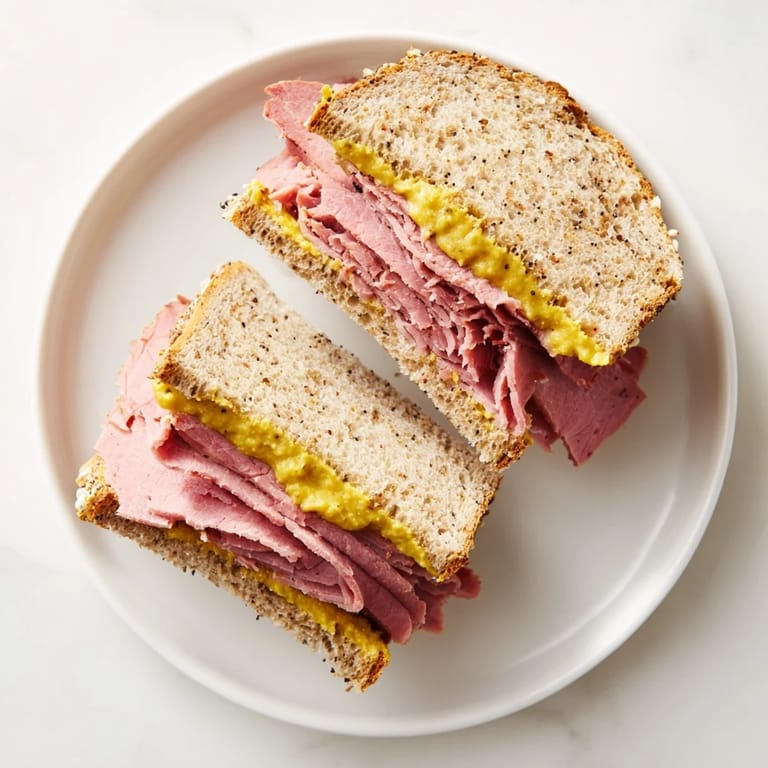
- A diagonal cut gives you better grip and makes the sandwich feel more intentional, though straight cuts work just fine. Serve immediately with pickles alongside.
 Save to Pinterest
 My grandmother used to say that a good sandwich was a small act of care, and I didn't understand what she meant until I watched someone's face when they bit into this one for the first time. It's not fancy, but it's honest, and somehow that matters.
Why the Details Matter
This sandwich exists because three components have to speak to each other—the rye's slight sweetness and density, the pastrami's umami depth and tender texture, and the mustard's sharp acidity cutting through everything. Miss any one of them, or compromise on quality, and you're eating something that feels halfhearted. Get them right, and you're eating history.
Making It Your Own
There's a reason the classic stays classic, but you can shift things around if you want. Some people warm the pastrami gently in the steam from a kettle or microwave it for 20 seconds, which loosens the texture slightly and makes the mustard cling better. Others add a slice of Swiss cheese, which mellows the whole thing into something closer to a Reuben territory. A thin spread of mayo underneath the mustard adds richness without changing the core identity of the sandwich.
The Deli Experience at Home
Pastrami on rye reminds me that sometimes the best meals aren't about complexity or technical skill—they're about respecting each ingredient enough to let it do what it does best. The ritual of putting this together, the way the mustard smells when you open the jar, the soft give of fresh rye bread—these small moments add up to something that tastes like more than just lunch.
- Serve this alongside proper deli pickles and good potato chips to complete the experience.
- If you're making sandwiches for more than two people, assemble them to order instead of all at once so the bread stays firm.
- This sandwich is best eaten the moment it's made, while the bread is still slightly warm and everything is in balance.
 Save to Pinterest
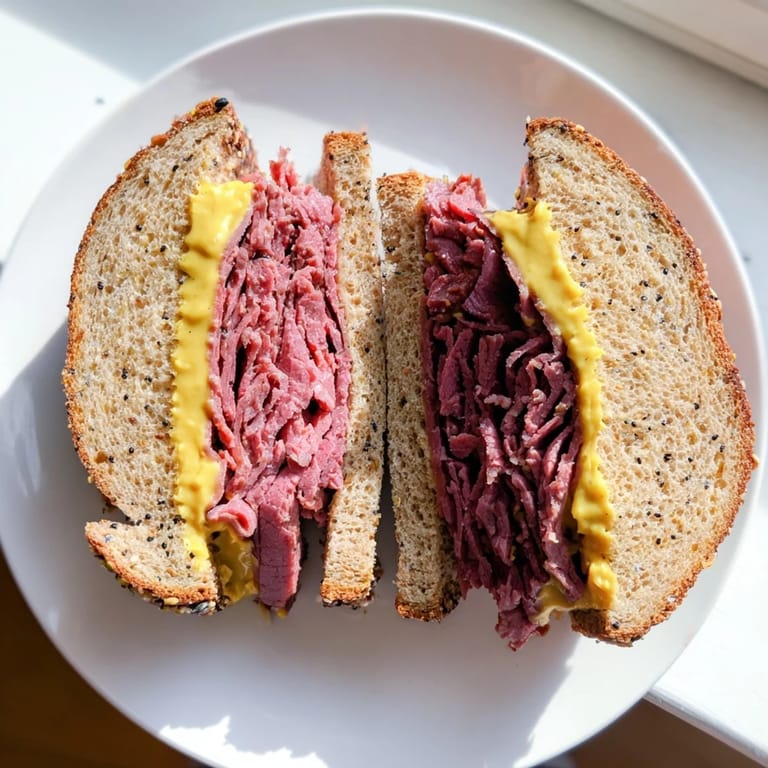
 This sandwich is what happens when you stop overthinking and just let good ingredients be themselves. Make it for someone who needs reminding that food can be simple and still matter.
Recipe Questions & Answers
- → What type of bread pairs best with pastrami?
Fresh rye bread, especially with caraway seeds, enhances the sandwich's flavor and provides a sturdy base.
- → Can I warm the pastrami before assembling?
Yes, briefly steaming or microwaving the pastrami can add a comforting warmth and soften the meat.
- → What mustard works well with this sandwich?
Yellow deli mustard offers a sharp, tangy kick, but spicy brown mustard is a great alternative for added heat.
- → Are there common variations to this sandwich?
Adding Swiss cheese and coleslaw creates a variation reminiscent of a Reuben sandwich.
- → What sides complement the sandwich best?
Classic sides include dill pickle spears and potato chips for a true deli experience.