 Save to Pinterest
 There's something almost magical about the moment a pretzel emerges from boiling water transformed. I discovered this while watching my neighbor through her kitchen window one Saturday morning—steam rising, her hands moving with surprising confidence around those twisted shapes. I had to ask, and she laughed, handed me one still warm, and said the secret was simpler than I'd imagined. That first bite, salty and chewy, made me determined to figure out how she'd mastered something I'd only eaten at baseball games.
I made these for the first time during a chaotic Sunday when my kids invited friends over unannounced. Instead of panicking, I found myself at the counter rolling dough, testing the water temperature with my elbow like my neighbor had shown me. Everyone gathered around while they baked, pressing their faces to the oven window, and suddenly my kitchen smelled like a proper German bakery. When those pretzels came out golden and crackling, even the teenagers put down their phones.
Ingredients
- Bread flour (4 cups): You need the protein content here—all-purpose flour won't give you that satisfying chew. Bread flour creates structure and holds shape during boiling.
- Warm water (1½ cups): Temperature matters more than you'd think; too hot kills the yeast, too cool and nothing rises. Aim for that comfortable bath temperature, around 110°F.
- Active dry yeast (2¼ tsp): One packet, and it needs those five foamy minutes to wake up properly. Don't skip this proofing step.
- Granulated sugar (1 tbsp): Just enough to feed the yeast and add subtle sweetness that balances the salt.
- Kosher salt (2 tsp): Use it for the dough; it's gentler than table salt.
- Unsalted butter (2 tbsp, melted): Adds richness and helps develop that tender crumb.
- Baking soda (⅔ cup): This is the magic ingredient—it creates that distinctive chewy crust and deep brown color. Don't skip it or substitute lye unless you really know what you're doing.
- Egg wash (1 yolk plus 1 tbsp water): Creates that gorgeous glossy finish and helps salt stick.
- Coarse pretzel salt: Bigger crystals taste better than regular salt and look more authentic.
Tired of Takeout? 🥡
Get 10 meals you can make faster than delivery arrives. Seriously.
One email. No spam. Unsubscribe anytime.
Instructions
- Wake the yeast:
- Combine warm water, sugar, and yeast in your bowl and let it sit. You'll know it's ready when it looks foam-topped and smells alive—that yeasty, almost beery aroma.
- Build the dough:
- Stir in the melted butter and salt, then gradually add flour. Your hands will get a little messy here, but that's when you know you're doing it right—the dough will come together into a slightly shaggy ball.
- Knead into smoothness:
- Five to seven minutes of kneading transforms the rough dough into something silky and elastic. Push with the heel of your hand, fold, turn, repeat; you'll feel the texture change under your palms.
- Let it rise:
- Place the dough in a lightly oiled bowl, cover it loosely, and find a warm spot. One hour later, it should have nearly doubled—poke it gently to check if it springs back slowly.
- Prepare the bath:
- While the dough rises, fill a large pot with water and baking soda and bring it to a rolling boil. The water will smell strong and smell slightly chemical—that's correct, and it's doing important work.
- Shape your pretzels:
- Divide the risen dough into eight pieces. Roll each into a rope about 20 to 22 inches long—this is easier than it sounds, especially if you let the dough rest for a minute first. Form a U, twist the ends twice around each other, then fold the twisted part down and press to seal, creating that classic pretzel shape.
- Boil briefly:
- Using a slotted spatula, carefully lower each pretzel into the boiling baking soda bath for exactly 30 seconds. This step is what makes them special—the exterior becomes chewy and develops that signature color. Work quickly so the bath stays hot.
- Top before baking:
- Place boiled pretzels on parchment-lined baking sheets. Brush generously with egg wash, then immediately sprinkle coarse salt over top while the wash is still wet.
- Bake until golden:
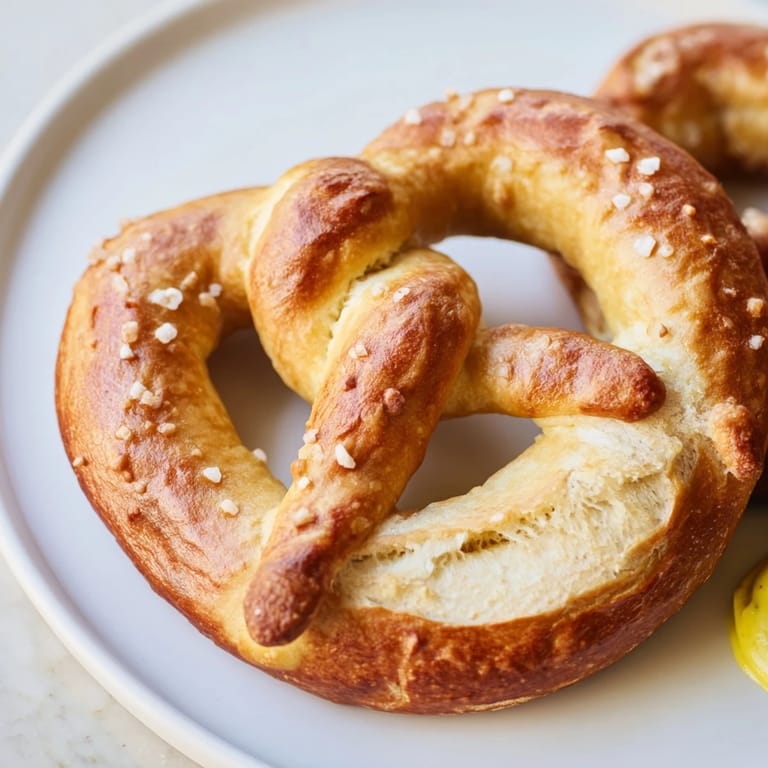
- At 450°F, they'll bake for 12 to 15 minutes until deep golden brown. The kitchen will smell incredible, and the baking soda will have done its job—the crust will be crackling and dark.
- Cool slightly and serve:
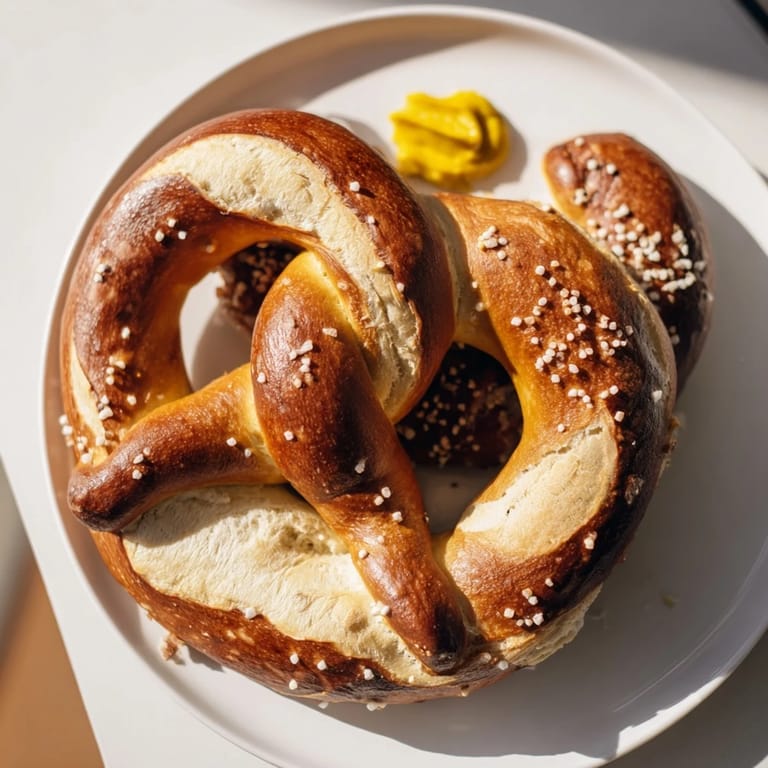
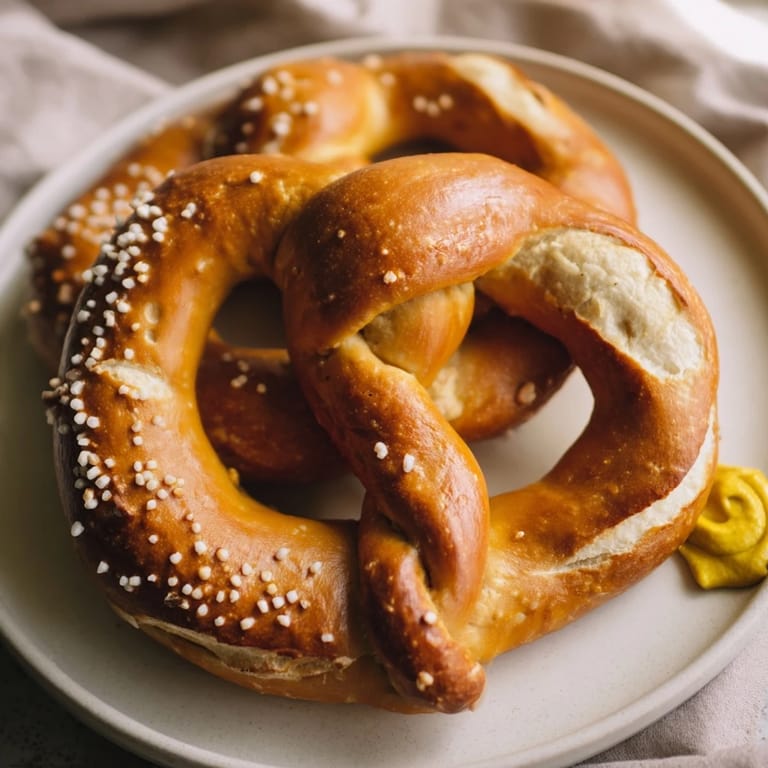
- Let them rest on a wire rack for a minute or two. They're best served warm with mustard while steam is still rising.
 Save to Pinterest
 That first batch taught me something unexpected: the moment when everyone stops talking because they're too busy eating is when you know you've done something right. My daughter, who normally just picks at things, asked for seconds and wanted to know if we could make them again next weekend.
Why the Baking Soda Bath Changes Everything
The baking soda bath seems mysterious at first, but it's pure chemistry. It raises the pH of the pretzel's surface, allowing the Maillard reaction to happen faster and more intensely, which creates that deep mahogany color and chewy exterior that boiled dough alone can't achieve. I learned this the hard way after trying to skip the step once—the result was pale, cakey, and nothing like what I was after.
Shaping Takes Practice (But Not Much)
The first pretzel I shaped looked more like a twisted mess than anything you'd recognize. By the third one, muscle memory kicked in, and my hands understood the rhythm. If yours don't look perfect, don't worry—they'll still taste amazing, and honestly, the slightly wonky ones have more character.
Variations and Serving Ideas
Once you've mastered the basic recipe, the world opens up. I've made cinnamon sugar versions for breakfast, topped them with sesame seeds for a nutty twist, and even experimented with everything bagel seasoning because, why not. My favorite discovery was brushing them with melted butter and sprinkling with fleur de sel after baking—the salt crystals catch the light and taste less harsh.
- For sweet pretzels, skip the coarse salt topping and brush with melted butter and cinnamon sugar immediately after baking while warm.
- Try pairing them with cheese sauce, honey mustard, or even sriracha mayo instead of plain mustard.
- These freeze beautifully for up to two months, and a quick oven toast brings them right back to life.
 Save to Pinterest
 There's something deeply satisfying about making pretzels from scratch—they're not complicated, but they feel special, and sharing them with people makes you look like you know your way around a kitchen. Every time I make a batch now, my neighbor waves from her window, and we both smile.
Recipe Questions & Answers
- → What makes the pretzels soft inside?
The dough is kneaded until smooth and elastic and allowed to rise for an hour, which helps create a tender, chewy crumb inside the pretzels.
- → Why dip the pretzels in a baking soda bath?
Dipping in boiling baking soda water creates the classic pretzel crust by promoting browning and giving the exterior its distinctive texture.
- → Can the salt be replaced or omitted?
For a sweeter variation, omit the coarse salt and brush the pretzels with melted butter, then sprinkle with cinnamon sugar instead.
- → What are good serving suggestions for these pretzels?
Serve warm with yellow or spicy brown mustard, or try cheese sauce or honey mustard for extra flavor.
- → Are there alternatives for toppings?
Sesame seeds or poppy seeds can be sprinkled on top before baking to add variety and extra flavor.